
Which compact SUV gives you more confident traction for commutes around Naperville, IL — the 2026 Mitsubishi Eclipse Cross or the 2026 Mazda CX-30?
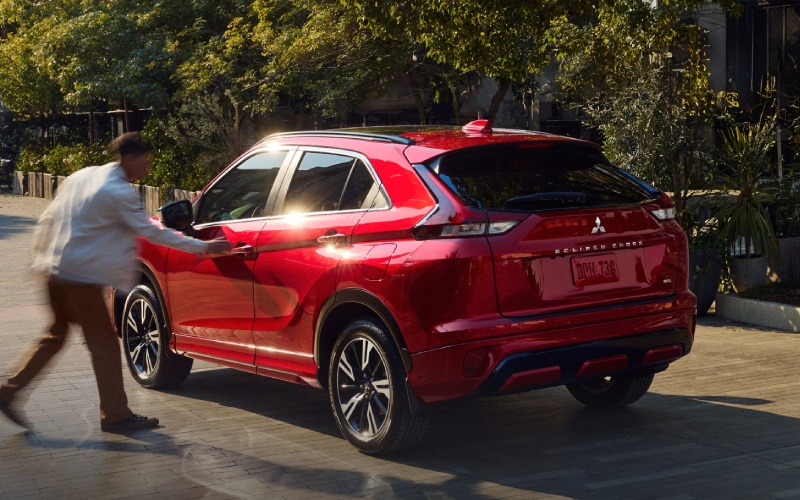
Motor Cars Mitsubishi – Which compact SUV gives you more confident traction for commutes around Naperville, IL — the 2026 Mitsubishi Eclipse Cross or the 2026 Mazda CX-30?
The short answer: both have AWD, but the Mitsubishi system is built for confidence in more real-world moments
Shoppers in the western suburbs often ask one foundational question when cross-shopping small SUVs: which one actually feels more planted when conditions change mid-commute? The 2026 Mitsubishi Eclipse Cross and 2026 Mazda CX-30 both make a strong first impression by making all-wheel drive standard. The difference is in how each system manages traction and stability, and how those choices play out on everyday roads, ramps, and parking lots. Mitsubishi’s Super-All Wheel Control (S-AWC) coordinates traction and yaw management with Active Yaw Control and an electronically controlled center coupling. In plain language, it’s constantly working to help the vehicle track straight and respond predictably, even when one side of the road is damp from last night’s drizzle and the other is bone dry. Mazda’s i-Activ AWD is also smart and proactive, using sensors to send torque where it’s needed, and it pairs nicely with the CX-30’s nimble chassis. Both are good; the question becomes which one you feel most at ease with when plans and pavement change fast.
Consider the common daily loop: a cold morning start, school drop-off with quick turns in a crowded lot, a short stretch of freeway near I-88, and an evening run for groceries. In those moments, the Eclipse Cross reveals its day-to-day strengths. Its ride quality is calm and composed, the steering is light for never-fussy parking, and S-AWC’s subtle corrections help you hold a steady line turning left across slick paint stripes or easing up a sloped driveway. The CX-30 counters with eager steering and chassis poise that drivers who like a sportier feel will appreciate. Still, when you add up the Eclipse Cross advantages—standard S-AWC, available Multi-View Camera System for close-quarters confidence, and the option to tow up to 1,500 pounds for a lightweight trailer—its real-world versatility becomes clear. That combination helps the Mitsubishi feel reassuring in exactly the situations you encounter most.
How S-AWC and i-Activ AWD differ when you’re actually behind the wheel
It helps to break the systems down by what you feel as a driver instead of what’s happening behind the scenes. Mitsubishi’s S-AWC is focused on maintaining a neutral, predictable path. When patches of sand or wet leaves intrude on a corner, S-AWC can adjust torque front-to-rear and use brake-based control side-to-side to help reduce push or pull. In practice, the vehicle feels settled, and you can maintain steady steering inputs. Mazda’s i-Activ AWD is excellent at sensing slip and proactively sending torque to the wheels that can use it; on a straight launch, the system makes takeoffs surefooted and drama-free. Both use sophisticated logic, but S-AWC’s coordinated approach to traction and yaw is what you notice most as a driver in complex, mixed-traction turns or when transitioning from a dry lane to a damp one while merging.
- Daily drivability: Eclipse Cross rides comfortably and filters out small road chatter; CX-30 feels taut and agile for back-road fans.
- Low-speed confidence: Eclipse Cross’ available Multi-View Camera System is a boon in tight lots; CX-30 offers a 360° View Monitor on select trims as well.
- Flexibility beyond commuting: Eclipse Cross is factory-rated to tow up to 1,500 pounds; CX-30 does not carry a U.S. tow rating.
Cabin tech and usability: the right tools for everyday life
Tech that’s easy to learn is the tech you actually use. The Eclipse Cross keeps it simple with an intuitive touchscreen and available Mitsubishi Connect features such as remote start and status checks (trial period with enrollment). Add conveniences like an available Handsfree Power Tailgate and available heated steering wheel, and you have a set of tools that reduce the little hassles of your routine. The panoramic glass roof option brightens the cabin and makes weekend drives feel special. The CX-30’s cabin is beautifully finished, and its available larger display and connected services are thoughtfully integrated; it’s one of the class standouts for materials and design. In day-to-day use, though, the Eclipse Cross’ touch-first interface and load-friendly cargo area give it the edge for quick transitions between school, errands, and short trips.
- Both SUVs: Standard all-wheel drive, robust active safety suites, and upscale conveniences on higher trims.
- Eclipse Cross advantages: S-AWC composure in mixed traction, available panoramic glass roof, factory towing capability, complimentary maintenance, and a 10-year/100,000-mile Powertrain Limited Warranty.
- CX-30 highlights: Sporty steering feel, elegant interior finish, and available driver-assistance upgrades on upper trims.
Who should choose which?
If you value a sporty steering feel above all else, the CX-30 will be on your shortlist. But if you prioritize calm confidence when conditions change, want a more flexible ownership story, and appreciate features that minimize small daily hassles, the Eclipse Cross lines up better with those needs. Its standard S-AWC, available 360-style camera view, factory-rated towing, and ownership coverage set a tone that’s both reassuring and practical. It’s the compact SUV that behaves like a bigger vehicle when you need it to, without feeling big when you’re squeezing into a narrow spot after a run for takeout.
Frequently Asked Questions:
Is all-wheel drive standard on both models?
Yes. The Eclipse Cross includes S-AWC across the lineup, and the CX-30 includes i-Activ AWD on every trim.
Which one is rated to tow?
The Eclipse Cross is factory-rated to tow up to 1,500 pounds. The CX-30 does not carry a U.S. tow rating.
Do both offer a 360-degree camera view?
Yes. Eclipse Cross offers a Multi-View Camera System on upper trims, and the CX-30 offers a 360° View Monitor on select trims.
What about warranty and maintenance coverage?
Mitsubishi provides an industry-leading 10-year/100,000-mile Powertrain Limited Warranty and 2-year/30,000-mile Limited Maintenance. Mazda’s coverage is shorter and does not include complimentary scheduled maintenance.
If you want help deciding which combination of traction tech and features fits your routine, our team can walk you through both systems, compare trims that matter for your routes, and set up a test drive that mirrors your daily drive cycle. One conversation is often all it takes to see how the Eclipse Cross aligns with what you need most. For a hands-on look and a locally informed recommendation, connect with Motor Cars Mitsubishi, serving Naperville, Bolingbrook, and Downers Grove.
0 comment(s) so far on Which compact SUV gives you more confident traction for commutes around Naperville, IL — the 2026 Mitsubishi Eclipse Cross or the 2026 Mazda CX-30?