
Which AWD system gives you more everyday control around Naperville, IL — S-AWC on the 2026 Mitsubishi Outlander or AWD on the 2026 Toyota RAV4?
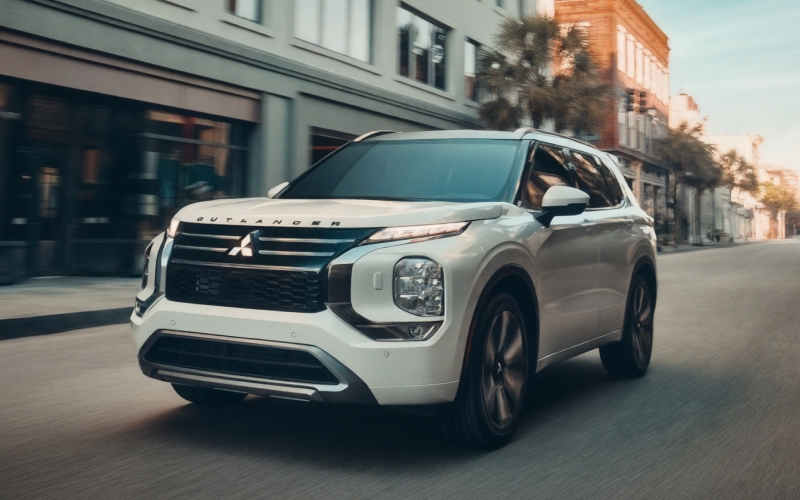
Motor Cars Mitsubishi – Which AWD system gives you more everyday control around Naperville, IL — S-AWC on the 2026 Mitsubishi Outlander or AWD on the 2026 Toyota RAV4?
When you’re weighing all-wheel confidence for daily life around Naperville, IL, you’re probably asking a deceptively simple question: which system inspires more control day in and day out—S-AWC on the 2026 Mitsubishi Outlander or the AWD you’ll find on the 2026 Toyota RAV4? Let’s break it down in clear, practical terms so you can decide with confidence.
Mitsubishi’s S-AWC—Super All-Wheel Control—was engineered first and foremost to enhance stability, traction, and steering feel on paved roads in all kinds of conditions. It doesn’t just shift power front to rear; S-AWC coordinates traction, yaw, and engine torque to help the Outlander feel settled and precise. That’s why drivers talk about the “calm” the system brings when rain glosses over Ogden Avenue, or when a thin layer of slush builds near curb lanes during shoulder seasons. Toyota’s available AWD systems are proven and effective too, and several RAV4 trims add terrain-focused features that shine on light trails and gravel. The difference is how each brand tunes its AWD personality for everyday, paved-road duty—Mitsubishi leans into on-road composure with driver-selectable modes like Tarmac, Gravel, Snow, and Mud on equipped trims, while Toyota emphasizes versatility across its model range.
How S-AWC feels in real life
On a typical weekday, S-AWC’s most noticeable trait is how naturally it responds to uneven traction. When one side of the road briefly slicks up near a shaded intersection or when wet leaves collect in a turn, the Outlander subtly maintains its line without drama. Steering inputs feel consistent, and the system’s torque management supports your intended path rather than reacting late and abrupt. It’s confident but unobtrusive—the hallmark of a road-first AWD system.
Pair S-AWC with the Outlander’s 48-volt mild-hybrid turbo powertrain and you get smooth takeoffs from stoplights and useful midrange pull onto the Reagan Memorial Tollway. The mild-hybrid assist helps the 1.5L turbo stay responsive without hunting for power, and that composure pays off during quick merges and rolling traffic changes common on the I-88 corridor.
What Toyota’s AWD brings to the table
The RAV4’s AWD hardware is a solid match for crossovers that dip into gravel paths or unmaintained lots. Its Multi-Terrain features and trim-specific tuning can sharpen traction in settings where surfaces vary dramatically in a short span. Around town, especially in straight-line situations, that AWD assurance is present and beneficial. Where you may notice a difference versus S-AWC is in how the vehicle feels mid-corner in wet or mixed conditions; Toyota’s tuning is certainly capable, but Mitsubishi’s coordination of steering, traction, and torque tends to feel more integrated when roads are slick yet still paved.
Tech plays a role too. Toyota Safety Sense 4.0 brings advanced assists, including available Traffic Jam Assist and curb-to-curb conveniences like available Advanced Park. Those are welcome features, and if self-parking is on your wish list, it’s a nice advantage. Mitsubishi counters with MI-PILOT Assist™ with Navi-link for hands-on driver assistance on the highway, a 360° multi-view camera system for low-speed confidence, and a Head-Up Display so more info stays in your sightline.
Everyday traction scenarios around Naperville
Consider a few common settings you might face in and around the Naperville Riverwalk area, DuPage Children’s Museum, or big-box parking lots along Route 59:
- Rain-slick roundabouts: S-AWC helps you track the arc with fewer steering corrections when the pavement is glossy.
- Painted lane markers and metal plates: Quick torque redistribution limits the momentary slip you can feel while crossing these surfaces during construction season.
- Crowded, uneven lots: The Outlander’s multi-view camera and calm throttle response make it easy to park or back out without fuss.
Could the RAV4 handle these tasks? Absolutely. But in back-to-back drives, many shoppers remark on the Outlander’s steadier steering feel and the sense that the chassis and AWD are working as one.
Driver confidence is more than AWD
All-wheel drive is only one piece of the confidence puzzle. The Outlander layers in standard Dual-Zone Automatic Climate Control with Micron Air Filtration, available 10.8-inch Head-Up Display, and an available Dynamic Sound Yamaha® Ultimate 12-speaker system that compensates volume for rain and speed—so your podcast or playlist stays clear on the Eisenhower, even when the wipers are busy. Mitsubishi’s 360° multi-view camera is a difference-maker when you’re parallel parking downtown or threading a drive-thru lane with tight curbs. And for ownership peace of mind, America’s Best-Backed Vehicles—featuring a 10-year/100,000-mile Powertrain Limited Warranty—reinforce long-haul assurance.
RAV4 loyalists will rightly point to the breadth of Toyota’s hybrid lineup and connected technology, along with TSS 4.0 improvements. Those are real strengths. But if your priorities lean toward surefooted, road-first traction, calm steering feel in the wet, and cabin tech that makes errands feel effortless, the Outlander’s S-AWC and overall tuning present a compelling case.
Test both—then trust your instincts
The best way to decide is to drive them the way you live. Take similar routes, find a few shaded turns and lightly crowned side streets, and pay attention to how settled the steering feels on imperfect pavement. Note the way the throttle responds when you roll back on at 25–35 mph. And, if you can, try a tight parallel park to see which camera system and sightlines reduce your stress the most.
One final note: whichever way you lean, consider the broader ownership story. Outlander’s warranty coverage, available MI-PILOT Assist™, and distinctive Yamaha® audio package are hard-to-duplicate touches that may tip the scales for many households.
Frequently Asked Questions:
Does S-AWC require special maintenance or driver input?
No special maintenance beyond normal service is required, and S-AWC’s modes are driver-selectable—choose Normal for daily use, Snow for wintry traction, or Tarmac for a more responsive feel as conditions warrant.
How does the Outlander’s mild-hybrid system affect daily driving?
The 48-volt Belt Starter Generator smooths engine restarts and bolsters low-speed response, making the SUV feel more refined as you pull away from lights or ease through stop-and-go.
Can the RAV4’s AWD match S-AWC in severe weather?
Both systems are capable, but S-AWC focuses on on-road composure with torque and yaw control designed to maintain line and steering feel in mixed-traction scenarios. RAV4’s AWD is effective, particularly in straight-line and light off-pavement situations.
Ready to compare on your terms? Motor Cars Mitsubishi is happy to set up back-to-back test drives and tailor a route that mirrors your routine—serving Naperville, Bolingbrook, and Downers Grove with a pressure-free, informative experience.
0 comment(s) so far on Which AWD system gives you more everyday control around Naperville, IL — S-AWC on the 2026 Mitsubishi Outlander or AWD on the 2026 Toyota RAV4?